Thursday, 10 July 2014

Why Charity Is Important

Blood Donation in Thailand. Stock Photo - 8845175


 In today's materialistic society, charity is often seen as low priority. However the reality is that the community we live in has a huge influence on us personally it fosters safety, responsibility and sustainability so it is important that we take our community seriously for the greater good of humanity and for our own personal benefit.

Most importantly though, you'll gain an appreciation for what REALLY matters and it's not fame or fortune!

After-all, there are many high-profiled people who are great believers in charity and the planet. Bill Gates donates millions of dollars to charities, Bob Geldoff and U2's Bono are great crusaders against world poverty, and many other celebrities offer money and their time to a variety of causes.

Yes, these people have the money to give and their image has done pretty well out of their endeavours but at the heart of their generosity is the genuine desire to make a difference. And they do.

But, you don't need lots of money or fame to contribute to the community we all can.

It is my honest belief that we should all help those less fortunate than ourselves and trust me, if you have the resources to be able to read this article on-line, then there are lots of people out there who are less fortunate!

Whether this help is financial through appropriate donations or through donating your time as a volunteer doesn't really matter, but we should all feel some social responsibility to do something.

Everyone can do something. YOU can do something. If you don't have the time, DONATE. If you can't afford to donate money, VOLUNTEER and offer your time or services.

Making Donations

As a general guide, aim to donate 10% of your income to charity. You may have heard the phrase, "Charity starts at home" so make sure your budget can afford it!

Wednesday, 2 July 2014

EBOLA VIRUS AND HUMANITY .......BATTLE


What Is the Ebola Virus?

Ebola disease—also called Ebola hemorrhagic fever or Ebola fever—is a rare and often fatal illness that humans and nonhuman primates (such as monkeys and gorillas) can contract. There have been several outbreaks of Ebola fever in Africa. There has never been a reported case of Ebola fever in people in the United States.
The Ebola virus causes Ebola fever. The virus is found in Africa and the Philippines—but, the virus from the Philippines does not cause illness in humans. The virus was named after the Ebola River in the Democratic Republic of the Congo, where it was first discovered.
The Ebola virus was discovered in 1976 and has appeared in sporadic outbreaks since then. According to the Centers for Disease Control and Prevention, there have been 2,265 reported cases of Ebola fever in humans around the world since 1976. Of these, 1,531 resulted in death (CDC, 2012).
Part 2 of 9: Types

Types of Ebola Virus

There are five subtypes of Ebola virus:
  • Ebola-Zaire
  • Ebola-Sudan
  • Ebola-Ivory Coast
  • Ebola-Bundibugyo
  • Ebola-Reston
All of these subtypes are found in Africa, except for Ebola-Reston, which is found in the Philippines. The Ebola-Reston virus is also the only subtype that will not cause illness in humans—it only affects animals.
Part 3 of 9: Causes

How Do You Contract the Ebola Virus?

You can get the Ebola virus through direct contact with the bodily fluids of an infected animal or human. These include blood, saliva, semen, vomit, urine, or feces.
According to the World Health Organization, you can also get the virus by handling a sick or dead wild animal that has been infected with it (WHO, 2007).
There is some evidence that the Ebola virus can be spread through the air from nonhuman primate to nonhuman primate, such as monkey-to-monkey, in research facilities. No definitive studies have proven this, however.
Part 4 of 9: Symptoms

What Are the Symptoms of Ebola Fever?

If you are exposed to the any of the African forms of the Ebola virus, you will begin to display symptoms anywhere from two to 21 days following that exposure. The onset of the illness is rapid. The initial symptoms resemble those of a common flu infection and include:
  • fever
  • headache
  • sore throat
  • joint and muscle soreness
  • weakness
As Ebola fever progresses, the symptoms become more severe. Late-stage symptoms of Ebola virus may include:
  • vomiting
  • diarrhea
  • redness in the eyes
  • swelling of the genitals
  • internal and external bleeding (some patients may have blood coming from their eyes, nose, mouth, ears, or rectum)
  • a bleeding rash over the entire body
Part 5 of 9: Diagnosis

How Is Ebola Fever Diagnosed?

Ebola fever is diagnosed using blood tests to detect the Ebola virus in your blood. Your doctor may test you for the Ebola virus if you have symptoms of Ebola fever and have recently been in an area where the virus is found.
Part 6 of 9: Treatments

How Is Ebola Fever Treated?

There is no cure for Ebola fever. The only available treatments are those meant to help to ease your symptoms. These may include:
  • oxygen therapy
  • intravenous fluids
  • blood transfusions
  • medications to treat shock
  • pain medications
Part 7 of 9: Getting Help

When to Call a Doctor

Call your doctor right away if you develop symptoms of Ebola fever and have recently traveled to Africa or been exposed to the Ebola virus. The earlier you receive treatment, the better your chances will be for survival.

Wednesday, 25 June 2014

Male Fertility

Male Infertility

There is no more confused medical care in our field than what is delivered by many urologists to the couple that suffers from "male infertility." In fact, many couples are told to delay the IVF treatment they should have had sooner (because of the wife's advancing age) in order just to wait for some dubious treatment of the male partner to increase his sperm count. Numerous control studies have demonstrated that administering clomid or nutritional supplements to the male, or performing varicocoele surgery, does nothing to improve his sperm count, and the often suggested testosterone supplements just lowers rather than raises his sperm count, and may eve n render him totally sterile.
Anatomy of the normal testicle Anatomy of the normal testicle.
Route of sperm transport from the testis to epididymis to the vas deferens Route of sperm transport from the testis to epididymis to the vas deferens.
Many husbands in infertile marriages are sent to urologists who then almost always in some communities recommend "varicocoelectomy." This is a procedure to tie off a varicose vein of the testicle. More than 15% of all men on the planet have a varicose vein of their left testicle, and most of these men are quite fertile. It is a completely benign and normal variant of testicular anatomy. Yet often the husband is subjected to this completely meddlesome surgery, often on both sides, despite the absence even of a varicocoele, and despite its ineffectiveness in anyway improving his sperm count. It is however ironically quite effective in delaying the treatment the couple really needs, all while the wife's eggs keep getting older. Furthermore, if done clumsily, bilateral varicocoelectomy can reduce the husband's merely low sperm count down to a zero sperm count.

Saturday, 21 June 2014

A POEM OF HOPE FROM THE KING.

"THIS TOO SHALL PASS AWAY."

A MIGHTY monarch in the days of old
Made offer of high honour, wealth and gold,
 
To one who should produce in form concise
A motto for his guidance, terse yet wise —
 
A precept, soothing in his hours forlorn,
Yet one that in his prosperous days would warn.
 
Many the maxims sent the king, men say.
The one he chose: "This too shall pass away."
 
Oh, jewel sentence from the mine of truth!
What riches it contains for age or youth.
 
No stately epic, measured and sublime,
So comforts, or so counsels, for all time
As these few words. Go write them on your heart
And make them of your daily life a part.
Has some misfortune fallen to your lot?
This too will pass away —absorb the thought,
And wait; your waiting will not be in vain,
Time gilds with gold the iron links of pain.
 
The dark to-day leads into light to-morrow;
There is no endless joy, no endless sorrow.
Are you upon earth's heights? No cloud in view?
Go read your motto once again: This too
Shall pass away; fame, glory, place and power,
They are but little baubles of the hour,
Flung by the ruthless years down in the dust.
Take warning and be worthy of God's trust.
Use well your prowess while it lasts; leave bloom,
Not blight, to mark your footprints to the tomb.
The truest greatness lies in being kind,
The truest wisdom in a happy mind.
He who desponds, his Maker's judgment mocks;
The gloomy Christian is a paradox.
Only the sunny soul respects its God.
Since life is short we need to make it broad;
Since life is brief we need to make it bright.
Then keep the old king's motto well in sight,
And let its meaning permeate each day.
Whatever comes, This too shall pass away.

Early ritirement plans you must know


Early retirement sounds pretty good when you're stuck in a cubicle counting down the hours until the weekend. If you don't enjoy your job anymore and are looking forward to spending more time pursuing your own agenda, early retirement can be ideal. The challenge is that you need to save up for it and make that money last for several decades. Here are the financial milestones you should achieve before taking early retirement:

You have retirement cash flow. You need to calculate how much income you will have after leaving your job. Social Security benefits typically can't be started until age 62 at the earliest. If you retire before that, you will need income from somewhere else. You can withdraw from your 401(k) or Roth IRA, but you need to decide how much to withdraw per year and make sure you don't deplete your retirement fund too quickly.
Get into the habit of tracking your cash flow while you're working, and practice living on your retirement budget for 12 months. It's even more important to control your spending in retirement because you'll have a fixed income. Monitoring your spending will allow you to understand where your money is going and help control lifestyle inflation as the years go by.

You know how your expenses will change. Certain expenses can be eliminated when you retire such as commuting costs. But some retirees end up spending more money annually after they quit working. Many people want to travel now that they have the time, and that will significantly increase your expenses unless you travel creatively. Other people spend money on hobbies they have been putting off for many years. A retirement budget needs to take into account all the activities that you would like to do as well as the usual bills.

You have retirement health insurance. Medicare won't kick in until you're 65, and you'll need to fund your own healthcare until then. You can keep your employer-sponsored health insurance for up to 18 months under COBRA, but you will probably have to pay a lot more than you used to while working. If your spouse is still working, then it's usually a much more affordable option to get coverage though his or her employer. The Affordable Care Act provides another option for early retirees, and you can shop for health insurance at your state's health insurance exchange. After retirement, your income will probably be lower, so you might qualify for tax credits to help cover the premiums. However, health insurance isn't cheap, and you might get sticker shock if you don't do your research before retiring.

You have no debt. If you have consumer debt, then you're probably not ready to retire early. It's also a good idea to pay off your mortgage before retirement so your monthly expenses will be reduced. Downsizing or relocating to a more affordable area can be a good option to reduce or get rid of a mortgage.
You have adjusted your portfolio. You need to make sure your asset allocation is properly targeted to meet your risk tolerance. Some early retirees have all their assets in stocks. That might be fine when you're still working because you can add money when the market is down. But that asset allocation probably needs to be adjusted after retirement. An early retiree also needs to be careful not to shift too much money into bonds because you need stocks for growth. When you're nearing retirement, reassess your risk tolerance and update your asset allocation accordingly.

You have achieved financial freedom. One way to estimate if you're ready for early retirement is to divide your investable assets by your annual expense. I call this the financial freedom ratio. If your financial freedom ratio is above 25, then you're in pretty good shape. You can use the 4 percent rule to withdraw from your portfolio, and chances are good that your money will last for 30 years or more. Of course, if you retire very early, then you probably need to be a bit more conservative and withdraw less until you're near 65, the normal retirement age.

If you have a healthy portfolio balance, no debt and a plan to deal with health care, then you might be ready to retire early. Try tracking your cash flow and living on your retirement budget for a while before pulling the plug. Once you retire, then you need to keep a good handle on your cash flow to make sure you don't overspend. Early retirement is a dream for many people, but it takes diligent saving and careful planning to make it real.


Saturday, 14 June 2014

KEFEE, THE LEGEND GOES HOME

kefee

Multiple award-winning gospel singer, Kefee Don Momoh, has been confirmed dead. She passed on in the early hours of Friday, after being in coma for weeks in an undisclosed American hospital.
She went into coma, after collapsing in on 14-hour flight while she was on her way to Chicago for an event about two weeks ago. A close family source revealed she was diagnosed of having pre-eclampsia – pregnancy induced high blood pressure.

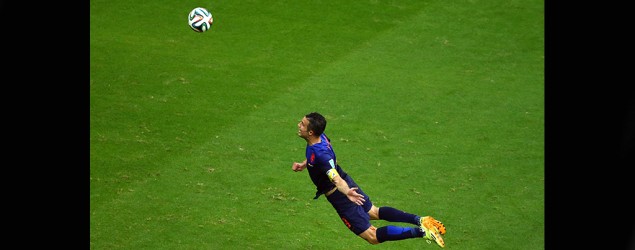
THE FLYING VAN PERSIE

The prettiest goal of the World Cup (Getty Images)
Robin van Persie scored a brilliant goal to begin the Netherlands' comeback and remarkable 5-1 win against Spain and he looked like a flying seal while he did it. After the match, Van Persie said, "Considering the circumstances, it must be the goal of my career."