Wednesday, 22 October 2014

Nigeria vigilant while celebrating EBOLA freedom


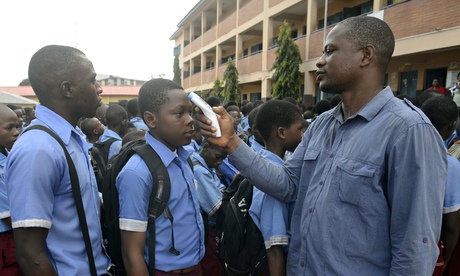
Nigeria teacher checks temperature

The World Health Organisation declared on Monday that Nigeria is free of Ebola, a rare victory in the months-long battle against the disease.
Nigeria’s containment of Ebola is a “spectacular success story”, WHO country director Rui Gama Vaz told a news conference in Nigeria’s capital, Abuja. Nigeria reported 20 cases of Ebola, including eight deaths. One of those who died was an airline passenger who brought Ebola to Nigeria and died soon after.
The WHO announcement came after 42 days had passed since the last case in Nigeria tested negative – 42 days is twice the disease’s maximum incubation period.
“The outbreak in Nigeria has been contained,” Vaz said. “But we must be clear that we only won a battle. The war will only end when west Africa is also declared free of Ebola.”
WHO said Nigeria had traced nearly all of the contacts of the Ebola patients in the country, all of whom were linked to the country’s first patient, a Liberian man who arrived with symptoms in Lagos and later died.

Wednesday, 15 October 2014

Why Nigeria Was Able to Beat Ebola, but Not Boko Haram


For Nigeria’s embattled government, October 20 is a date worth circling on the calendar: That day will mark 42 days since Nigeria’s last confirmed Ebola case, which, at twice the 21-day incubation period, will allow the country to declare itself free of a disease that has ravaged its West African neighbors.

Tuesday, Nigeria reached a milestone it would much rather ignore: Six months ago, militants from the terrorist group Boko Haram kidnapped 276 schoolgirls from the country’s Chibok region, and, despite a worldwide campaign to free them, 219 remain in captivity. While the kidnapping has attracted significant publicity—epitomized by the viral #BringBackOurGirls campaign on Twitter—violence attributed to Boko Haram has killed thousands in Nigeria’s northern provinces.
The contrast between the two anniversaries raises an uncomfortable question: Faced with these two enormous crises, how has Nigeria handled one so well and the other so poorly?
"Ebola impacts everyone. It doesn’t have ties to particular sects or groups."
One major reason is Nigeria’s political geography, which, throughout the country’s post-colonial history, has caused great turmoil. A country of some 170 million people split into numerous ethnic and linguistic groups, Nigeria has struggled to bridge the gap between its relatively affluent Christian south and its poorer Muslim north.

Boko Haram, whose name roughly means “Western education is a sin,” has exploited this divide. The group largely operates in Nigeria’s three northeastern provinces, all of which are controlled by the opposition All People’s Congress (APC) party and where distrust of President Goodluck Jonathan’s government runs high.

“A lot of people in northern Nigeria are, in fact, disgusted with Boko Haram,” Rudy Atallah, a senior fellow at The Atlantic Council and an expert on Nigeria, said. “But because the population of the North has felt neglected by the South for so long, many of them view Boko Haram as an able body fighting against the government.”

By contrast, when Patrick Sawyer, the Liberian-American man who tested positive for Ebola, arrived in Lagos, he found himself in a city equipped with West Africa’s most advanced health-care infrastructure as well as the headquarters of many multinational organizations. And, unlike the fight against Boko Haram, combating Ebola transcends ethnic, political, and religious divisions.
“Ebola impacts everyone,” Atallah noted. “It doesn’t have ties to particular sects or groups.”
The next inflection point in Nigerian politics may come in February, when the country chooses a new president. Having served one full term, Jonathan will be eligible.* A victory by his People’s Democratic Party, which has governed Nigeria for 14 years and whose voter base resides in the south, may exacerbate the already fierce regional divide in the country, as well as make the search for the remaining 219 hostages even more difficult

This article was originally published at http://www.theatlantic.com/international/archive/2014/10/why-nigeria-stopped-ebola-but-not-boko-haram/381442/
Friday, 10 October 2014

Cut Heart Attack Risk By 86 Percent.

Men Can Cut Their Heart Attack Risk By 86 Percent. So Why Don't They?

Listen up, men: A new study has found a way for you to reduce your chances of having a heart attack by a whopping 86 percent. All you have to do is exercise regularly, eat lots of veggies, not smoke, barely drink, and watch your waistline. So why isn’t everybody doing it?
“That is the basic question that health psychologists have been examining for the past 30 to 40 years,” James Maddux, a psychology professor. “And the short, simple answer is this: Just about everything we do that’s unhealthy in the long run — including eating, drinking alcohol, and not moving our bodies — feels good in the short run. And everything that’s good for us — exercising, eating less pasta and bread, not smoking if someone’s a smoker — takes effort, and that can be unpleasant. That is the basic problem.”

Malala Yousafzai becomes youngest-ever Nobel Prize winner


OSLO: The Nobel Peace Prize went Friday to 17-year-old Pakistani Malala Yousafzai and India’s Kailash Satyarthi for their work promoting children’s rights.
The Norwegian Nobel Committee awarded the prize saying that peaceful global development can only come about if children and the young are respected.
Malala is the youngest person to be awarded the globally prestigious annual prize.
Prime Minister Nawaz Sharif has congratulated teenage education campaigner Malala Yousafzai on winning the Nobel Peace Prize, calling her the “pride” of his country.
“She is (the) pride of Pakistan. She has made her countrymen proud. Her achievement is unparallelled and unequalled. Girls and boys of the world should take the lead from her struggle and commitment,” he said in a statement.

First Ebola, Now Marburg. How Do We Stop Future Outbreaks?

First Ebola, Now Marburg. How Do We Stop Future Outbreaks?

Marburg, a virus similar to Ebola, has hit the radar in the African country of Uganda, raising concerns about another deadly outbreak. With two lethal viruses threatening public health, many are questioning why these contagions seem to be flaring up more often — and more important, what we can do to avoid them in the future.
The current Ebola outbreak originated in West Africa and has killed more than 3,800 people, more than all other past outbreaks combined. The first Marburg death was confirmed recently in Kampala, Uganda. Both viruses cause hemorrhagic fevers and are passed from animals to humans, which has experts examining how humans and African wildlife interact.
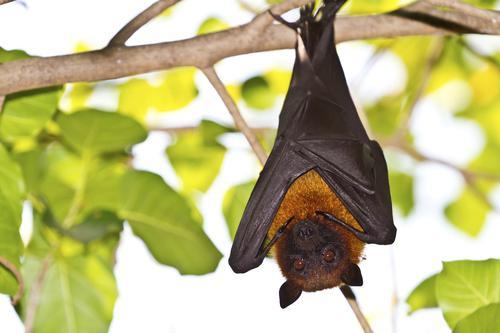
One mystery surrounding these viruses is where they live between outbreaks, when they aren't infecting humans, author and Ebola expert David Quammen told National Geographic. For example, health officials know Ebola likely goes dormant in an animal, called its "reservoir host," but they have yet to identify exactly which species. At least one of the suspects is the fruit bat, which is believed to host several other viruses (including Marburg and SARS) without getting sick. These bats usually live in large, tightly packed groups, allowing the virus to spread easily among the animals.

Friday, 26 September 2014

HOW TO STOP PREMATURE EJACULATION

436098 intro.jpg

Premature ejaculation, or ejaculating before you or your partner wanted you to, is a common problem that strikes most men at some point in their lives. Several factors can influence when ejaculation occurs, but it can be controlled with some forethought or, in extreme cases, medical intervention. Here are some strategies to help you get over premature ejaculation and improve your sexual stamina.

Wear a condom. It sounds too simple to be true, but it works for a lot of men. Condoms reduce stimulation for most men, which should prolong the time before ejaculation.[1]
  • Steer clear of condoms that are marketed as extra thin. You can always upgrade to a brand that allows more stimulation later.
  • Some condoms are coated with a slight numbing gel on the inside. This can help you put off ejaculation for longer without causing numbness to your partner. (Just make sure you know which side is where when you put it on.)

  • Apply strategic pressure. With a little anatomy knowledge, you can delay an oncoming ejaculation by applying pressure to one of two spots.
  • Perineum pressure: Pressing on the perineum, a spot midway between your scrotum and your anus, will help to stop ejaculation because this spot reaches through to the prostate gland. It is the prostate that contracts and expands during orgasm and then expels the ejaculation fluid. Ask your partner to apply this loving pressure for you.
  • Testes tug: When a man nears orgasm his scrotum rises up closer to his body. You can delay ejaculation by gently pulling your testes down and away from your body. Your partner can also do this for you.
Reduce anxiety. For many men anxiety and pressure to perform is a major contributor to premature ejaculation. Relax and remember that your partner probably cares about more than the timing of your orgasms, and that premature ejaculation doesn't mean you can't still be good in bed.
  • Take climaxing out of your expectations. Instead of viewing intercourse only as a means of achieving orgasm, reframe it as relaxing, pleasurable time with your partner that you'll enjoy regardless of ejaculation. Discuss this new mindset with your partner, so that he or she can stop pressuring you, intentionally or not.
Think nonsexual thoughts. If you notice yourself getting too excited, turn your thoughts to something distant, abstract and unsexy, such as math, rush hour traffic or baseball. Only dwell on it long enough to give yourself a short break from arousal, maybe 5 to 10 seconds, then refocus your attention on your partner. Avoid thinking of a topic that is going to make you stressed or cause you to lose your arousal entirely

Stop Premature Ejaculation Step 6.jpg

I REMAIN A KING

Thursday, 25 September 2014

Nasal Allergy Roots

  Image result for pictures of nasal allergy

Image result for pictures of nasal allergyImage result for pictures of nasal allergy

 Why we get nasal allergy symptoms

Allergic reactions occur when the immune system encounters and overreacts to substances that are not generally considered harmful. These substances are called allergens.
Image result for pictures of nasal allergyIn people who have nasal allergies, the immune system reacts to an airborne (inhaled) allergen by creating an antibody called immunoglobulin E, or IgE, that is designed to fight that specific allergen. This antibody-allergen complex attaches to certain cells in the nasal passages and causes the release of chemicals including histamine, which in turn cause inflammation.
The end result is nasal allergy symptoms—congestion, sneezing, itchy nose or runny nose. Some common examples of inhaled allergens are airborne pollens from some plants and trees, mold spores, and dog and cat dander.

Allergies and genetics

Just like many of your physical characteristics—such as hair or eye color and height—your susceptibility to allergies may be inherited. However, even with a genetic tendency, you don't automatically get allergies. Several factors must also be present in order for a person to develop an allergic sensitivity. These include:
  • Specific inherited genes
  • Exposure to the allergens you are genetically predisposed to react to
  • The amount of, and length of, exposure to the allergens
For instance, even with a genetic likelihood to develop an allergy to dust mites, it may take several years of exposure to the allergen before allergy symptoms appear. This is why, as people age, they sometimes develop allergies to substances in their environment.

Your likelihood of inheriting allergies

If one of your parents had allergies, you have about a 30 percent chance of inheriting allergic tendencies. If both of your parents had allergies, your chance of having allergies increases to 70 percent.